
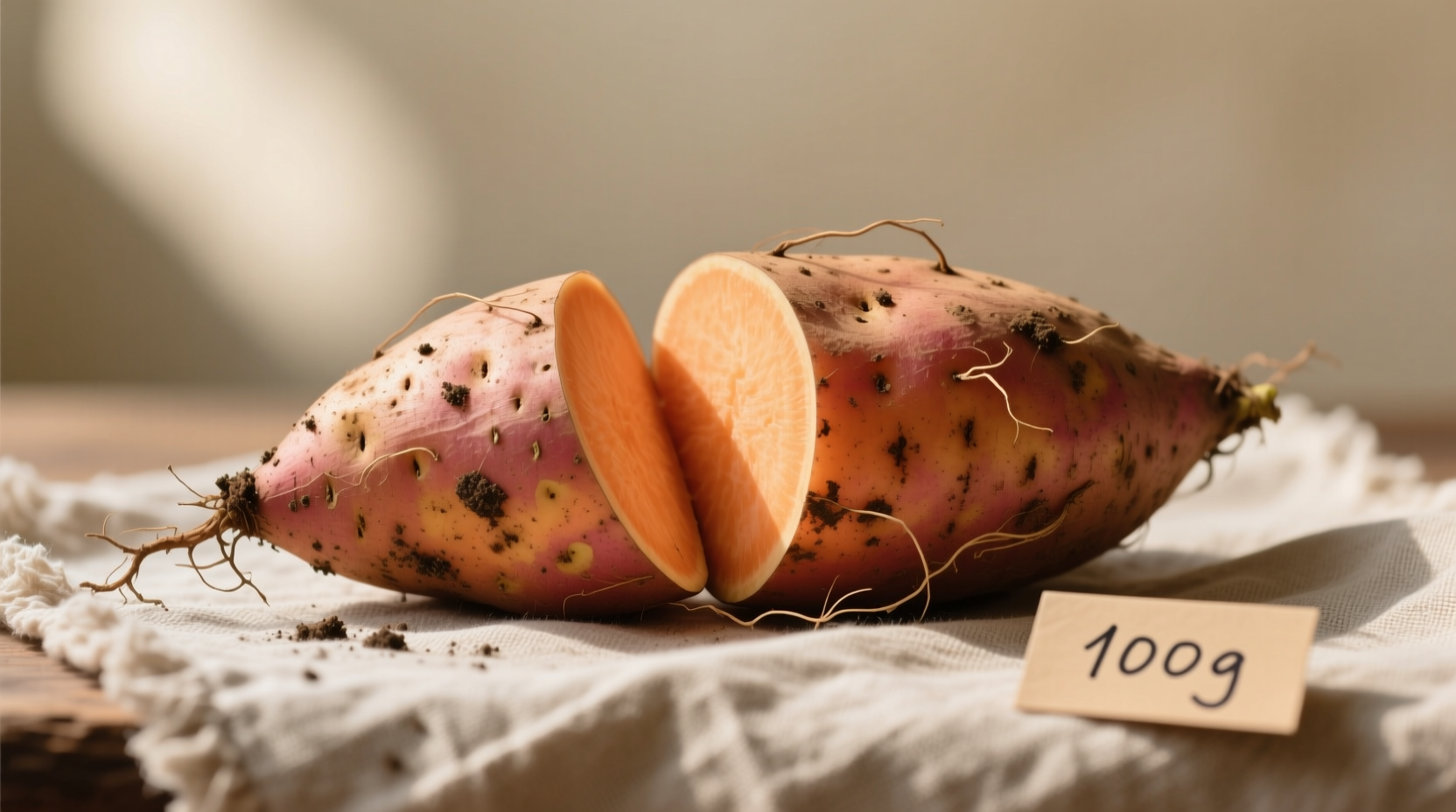
100 grams of sweet potato contains approximately 86 calories, 20g carbohydrates, 3g fiber, 4.2g sugar, 1.6g protein, and delivers 283% of your daily vitamin A needs. This precise measurement is the standard nutritional reference used by dietitians and food scientists worldwide to provide accurate dietary information.
Why 100 Grams Is the Gold Standard for Nutritional Analysis
When you're tracking your nutrition or comparing food values, you've probably noticed that most nutritional databases use 100 grams as the standard measurement. This isn't arbitrary—it's the international standard that allows for accurate comparisons across different foods and serving sizes. Understanding what 100 grams of sweet potato actually means in practical terms can transform how you plan meals and track your nutrient intake.
Complete Nutritional Profile of 100g Sweet Potato
Sweet potatoes aren't just delicious—they're nutritional powerhouses. Here's exactly what you get in a 100-gram serving of raw sweet potato, according to the USDA's FoodData Central database:
| Nutrient | Amount | Daily Value % |
|---|---|---|
| Calories | 86 kcal | 4% |
| Carbohydrates | 20.1 g | 7% |
| Fiber | 3.0 g | 11% |
| Sugars | 4.2 g | - |
| Protein | 1.6 g | 3% |
| Total Fat | 0.1 g | 0% |
| Vitamin A | 14,187 IU | 283% |
| Vitamin C | 2.4 mg | 4% |
| Potassium | 337 mg | 10% |
| Manganese | 0.3 mg | 13% |
This comprehensive nutritional profile comes from the USDA FoodData Central, the most authoritative source for nutritional information in the United States. The data reflects raw sweet potato; cooking methods can affect these values, particularly water content and certain vitamin levels.

How 100g Sweet Potato Fits Into Your Daily Nutrition
Understanding how this single serving contributes to your overall nutrition is crucial for meal planning. That 100-gram portion delivers more than your entire daily requirement of vitamin A—specifically in the form of beta-carotene, which your body converts to active vitamin A as needed. This makes sweet potatoes one of the most efficient natural sources of this essential nutrient.
For context, here's how 100g of sweet potato compares to other common carbohydrate sources:
- White rice (100g cooked): 130 calories, 28g carbs, minimal vitamins
- Whole wheat bread (100g): 247 calories, 41g carbs, moderate fiber
- Quinoa (100g cooked): 120 calories, 21g carbs, 4g protein
- Sweet potato (100g): 86 calories, 20g carbs, 283% vitamin A, 11% fiber
Practical Measurement Guide: What Does 100g Actually Look Like?
While food scales provide the most accurate measurement, most home cooks need visual references. A 100-gram portion of sweet potato equals:
- Half of a medium sweet potato (about 5 inches long)
- A small fist-sized portion
- Approximately ⅔ cup when cubed
- About ½ cup when mashed
When tracking your intake, remember that cooking methods affect weight. A 100g raw sweet potato will weigh less after cooking due to water loss, but the nutrient density actually increases as water content decreases.
Diet-Specific Considerations for 100g Sweet Potato
While sweet potatoes benefit most diets, certain health conditions require special consideration:
For Diabetics and Blood Sugar Management
With a glycemic index of 44-70 (depending on cooking method), sweet potatoes have a moderate impact on blood sugar. The 20g of carbohydrates in 100g provides about 1.3 carbohydrate exchanges. Pairing with protein or healthy fats significantly reduces the glycemic response. Boiling rather than baking maintains a lower glycemic index.
For Weight Management
At just 86 calories per 100g, sweet potatoes offer exceptional volume-to-calorie ratio. The high fiber content promotes satiety, making them valuable for weight management. Research published in the Journal of Nutrition and Metabolism shows that high-fiber starchy vegetables like sweet potatoes can support sustainable weight loss when incorporated into balanced meal plans.
For Athletes and Active Individuals
The complex carbohydrates in sweet potatoes provide sustained energy release. The potassium content (337mg per 100g) supports muscle function and electrolyte balance. Many sports nutritionists recommend including sweet potatoes in pre-workout meals for their ideal carbohydrate-to-nutrient ratio.
Maximizing Nutritional Benefits: Preparation Tips
To get the most from your 100g sweet potato serving:
- Keep the skin on: Contains additional fiber and nutrients
- Pair with healthy fats: Vitamin A absorption increases when consumed with fats like olive oil or avocado
- Avoid excessive cooking: Boiling for 20 minutes preserves more nutrients than longer cooking times
- Combine with iron-rich foods: The vitamin C content enhances non-heme iron absorption from plant foods
Common Questions About 100g Sweet Potato Measurements
How many calories are in 100g of cooked sweet potato versus raw?
Cooking concentrates calories slightly due to water loss. While 100g raw sweet potato contains 86 calories, the same weight cooked contains approximately 90 calories. However, a 100g cooked portion actually represents more sweet potato than 100g raw because of reduced water content.
Is 100g of sweet potato too much for a single serving?
For most adults, 100g (about half a medium sweet potato) makes an appropriate single serving as part of a balanced meal. Those managing carbohydrate intake may reduce to 75g, while active individuals might increase to 150g. The appropriate portion depends on your overall dietary needs and goals.
Does the nutritional value differ between orange and purple sweet potatoes?
Yes, while both varieties offer similar macronutrient profiles, purple sweet potatoes contain significantly higher levels of anthocyanins (powerful antioxidants), while orange varieties provide substantially more beta-carotene. Both types deliver approximately 86 calories per 100g serving with similar carbohydrate content.
How does 100g sweet potato compare nutritionally to regular potatoes?
Per 100g, sweet potatoes contain more than double the vitamin A of regular potatoes, slightly more fiber, and similar carbohydrate content. Regular potatoes have higher potassium but less vitamin C. Both provide approximately 80-90 calories per 100g serving, making them comparable energy sources with different micronutrient profiles.
Can I eat sweet potatoes daily as part of a healthy diet?
Yes, consuming sweet potatoes daily in appropriate portions (100-150g) can be part of a balanced diet. Their high vitamin A content means you shouldn't consume extremely large quantities daily, but moderate portions provide valuable nutrients without risk of toxicity for most people. Variety remains important in any healthy eating pattern.




 浙公网安备
33010002000092号
浙公网安备
33010002000092号 浙B2-20120091-4