
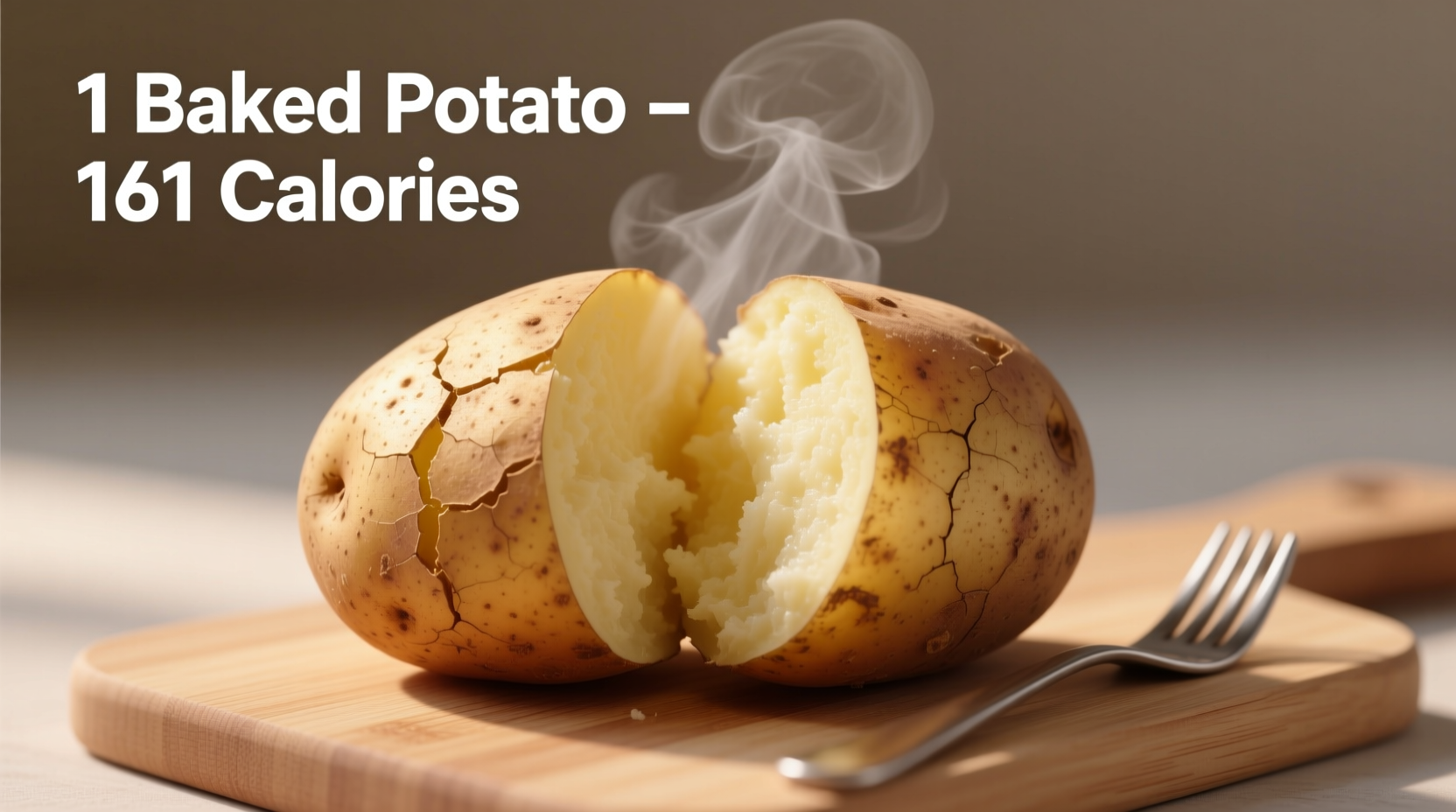
A medium-sized baked potato (about 173 grams) with skin contains approximately 161 calories. This nutrient-dense food provides essential vitamins, minerals, and fiber while remaining relatively low in calories compared to many other carbohydrate sources.
Understanding the exact nutritional profile of baked potatoes helps you make informed dietary choices. Whether you're managing your weight, tracking macros, or simply curious about this staple food, knowing precisely what's in your baked potato matters for your health goals.
Nutritional Profile of a Baked Potato
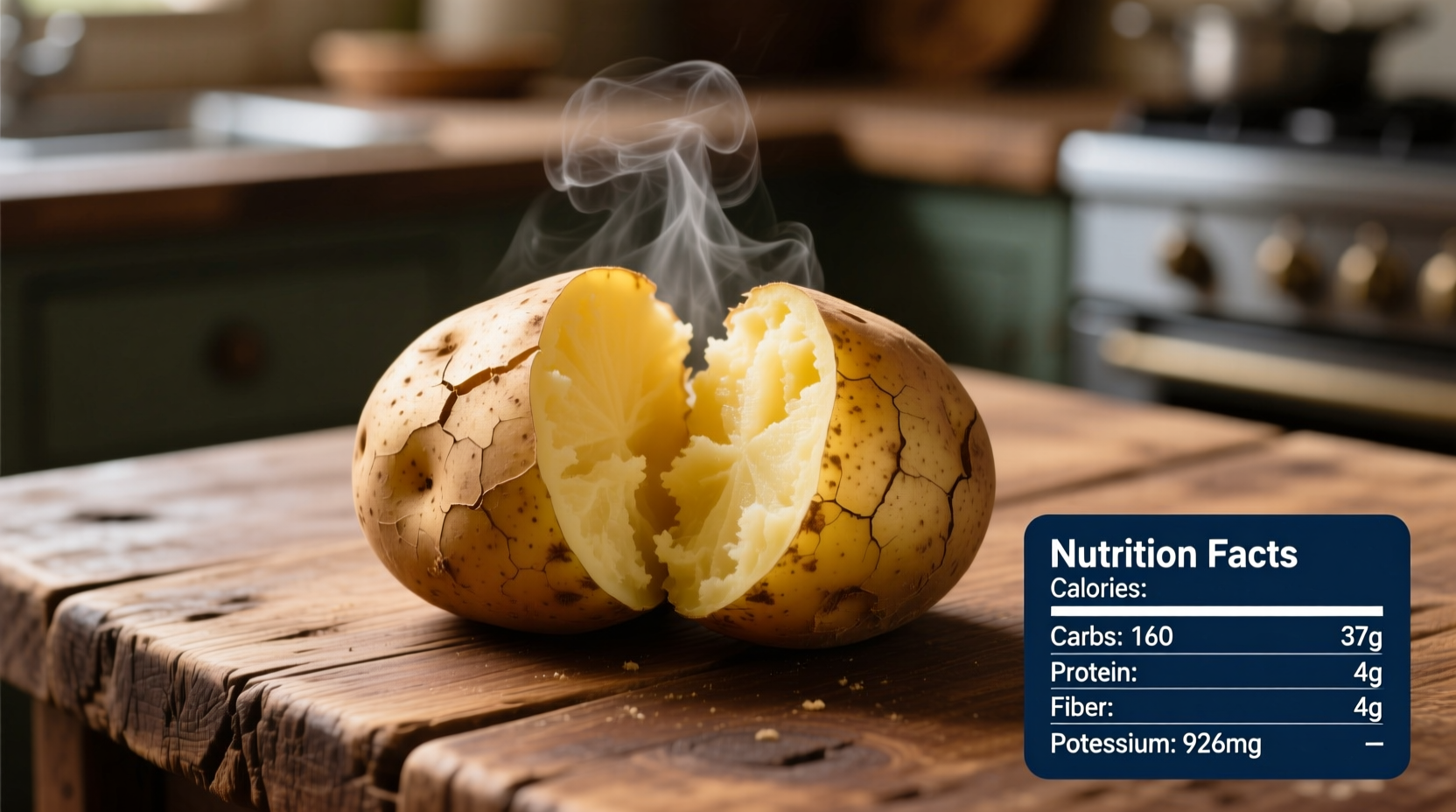
While calories are important, the complete nutritional picture reveals why baked potatoes deserve a place in balanced diets. Let's examine the full nutritional composition of a standard medium baked potato (173g) with skin, according to USDA FoodData Central:
| Nutrient | Amount | % Daily Value* |
|---|---|---|
| Calories | 161 | 8% |
| Total Fat | 0.2g | 0% |
| Carbohydrates | 37g | 13% |
| Dietary Fiber | 3.8g | 14% |
| Protein | 4.3g | 9% |
| Potassium | 926mg | 20% |
| Vitamin C | 17mg | 19% |
| Vitamin B6 | 0.6mg | 35% |
*Percent Daily Values based on a 2,000 calorie diet. Source: USDA FoodData Central
How Potato Size Affects Calorie Count
The calorie content of baked potatoes varies significantly based on size. Many people don't realize that "one potato" can range dramatically in nutritional content:
- Small potato (130g): Approximately 121 calories
- Medium potato (173g): Approximately 161 calories
- Large potato (299g): Approximately 278 calories
- Jumbo potato (369g): Approximately 342 calories
This substantial range explains why portion control matters when tracking baked potato calories for dietary management. The USDA standardizes nutritional information using a medium potato (5.3 ounces or 173g with skin), but grocery store potatoes rarely conform to this exact size.
Preparation Methods That Impact Calorie Content
How you prepare your baked potato significantly affects its final calorie count:
With or Without Skin
Leaving the skin on adds valuable fiber and nutrients while minimally affecting calories. A medium baked potato with skin contains about 161 calories, while the same potato without skin contains approximately 145 calories. The skin provides nearly half the fiber content, making it nutritionally worthwhile to keep on.
Toppings: The Calorie Game-Changer
The real calorie impact comes from what you add to your baked potato. Consider these common toppings and their calorie contributions:
- 2 tablespoons sour cream: +52 calories
- 1 tablespoon butter: +102 calories
- ¼ cup shredded cheddar cheese: +114 calories
- 2 tablespoons bacon bits: +26 calories
- 2 tablespoons plain Greek yogurt: +20 calories
- 2 tablespoons chives: +2 calories
A plain baked potato transforms from a 161-calorie nutritious side into a 455-calorie meal with just sour cream, butter, and cheese. Choosing healthier toppings keeps your baked potato within reasonable calorie limits while enhancing flavor.
Health Benefits Beyond Calories
Baked potatoes offer impressive nutritional benefits that extend far beyond their calorie count. According to research published in the American Journal of Clinical Nutrition, potatoes provide more potassium per serving than bananas and significant amounts of vitamin C.
The high fiber content (particularly when eaten with skin) supports digestive health and promotes satiety, helping with weight management. Potassium contributes to healthy blood pressure levels, while vitamin B6 supports brain function and metabolism.
Practical Dietary Integration
For those tracking calories or managing specific dietary needs, baked potatoes can be a versatile component of healthy eating patterns:
For Weight Management
With approximately 77 calories per 100 grams, baked potatoes have a lower calorie density than many other carbohydrate sources. Their high water and fiber content promotes fullness, potentially reducing overall calorie intake at meals.
For Active Individuals
The complex carbohydrates in baked potatoes provide sustained energy release, making them excellent pre-workout fuel. The potassium content also helps prevent muscle cramps during physical activity.
Healthy Topping Alternatives
Instead of high-calorie traditional toppings, consider these nutritious alternatives:
- Steamed broccoli with lemon juice
- Black beans and salsa
- Plain Greek yogurt with chives
- Steamed spinach with garlic
- Cottage cheese with everything bagel seasoning
Common Questions About Baked Potato Nutrition
Many people have specific questions about incorporating baked potatoes into their diets while managing calorie intake. Here are answers to frequently asked questions based on current nutritional science.




 浙公网安备
33010002000092号
浙公网安备
33010002000092号 浙B2-20120091-4