
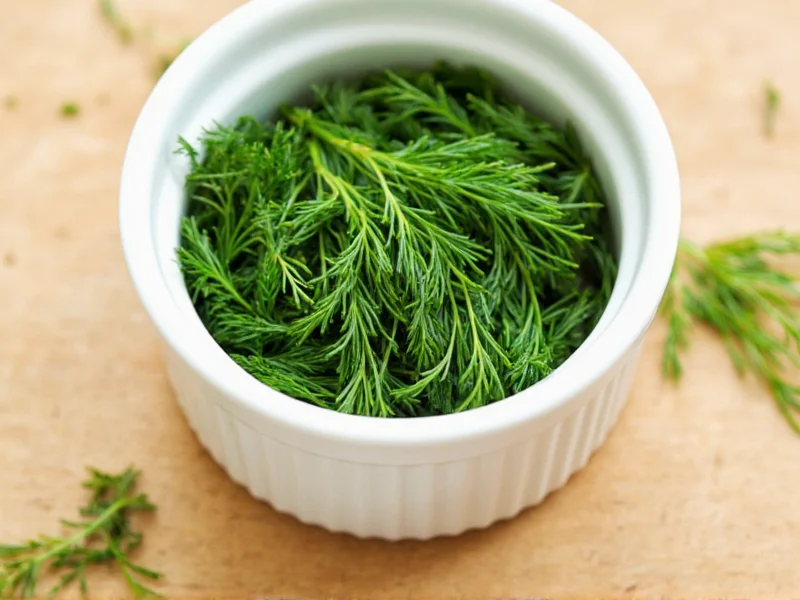
When adapting recipes that call for fresh dill but you only have dried dill available, understanding proper herb conversions ensures your dishes maintain balanced flavor profiles. The 3:1 ratio—where 3 parts fresh herb equals 1 part dried herb—is a culinary standard that accounts for the intensified flavor concentration that occurs when moisture is removed from herbs.
Understanding Fresh-to-Dried Herb Conversion
Fresh herbs contain significant moisture that dilutes their essential oils and flavor compounds. When herbs are dried, this water content evaporates, leaving behind a more concentrated form of the herb's aromatic compounds. For dill specifically, this concentration means you need substantially less dried product to achieve equivalent flavor.
| Measurement | Fresh Dill | Dried Dill |
|---|---|---|
| Teaspoon | 3 tsp | 1 tsp |
| Tablespoon | 1 tbsp | 1 tsp |
| Cup | 1 cup | 1/3 cup |
| 1/3 Cup | 1/3 cup | 1 tbsp |
Factors Affecting Dill Conversion Accuracy
While the 3:1 ratio provides a reliable starting point for 1 3 cup fresh dill is how much dried conversions, several variables can influence the precise substitution:
- Herb quality - Freshly harvested dill contains more volatile oils than store-bought dill that's been sitting for days
- Drying method - Sun-dried, oven-dried, and commercially dehydrated dill may have slightly different potency levels
- Storage conditions - Dried dill loses potency over time; older dried herbs may require slightly more
- Recipe type - Long-cooking dishes may require less dried dill as flavors intensify during cooking
Practical Substitution Guidelines for Dill
When converting 1/3 cup fresh dill to dried dill measurement in your recipes, follow these professional kitchen practices:
- Start with the standard conversion (1/3 cup fresh = 1 tbsp dried)
- Add dried dill early in the cooking process to allow flavors to distribute evenly
- Taste before serving and adjust if needed—dried dill's flavor develops slowly
- For delicate dishes like salads or dips, consider using 3/4 tablespoon instead of a full tablespoon to prevent overpowering
- When in doubt, begin with less—you can always add more, but you can't remove excess
Why Dill Requires Special Attention in Conversions
Dill presents unique considerations compared to other herbs due to its delicate flavor profile. Unlike robust herbs like rosemary or thyme, dill's subtle anethole compounds (which give it that distinctive flavor) are more volatile. This means:
- Dried dill loses potency faster than many other dried herbs
- Fresh dill's flavor diminishes quickly after harvesting
- The feathery fronds contain most flavor, while stems contribute little
- Improper conversion can result in either bland dishes or overpowering medicinal notes
Recipe Applications for Proper Dill Conversion
Understanding how much dried dill equals 1/3 cup fresh proves particularly valuable for these common applications:
- Pickling recipes - Where precise herb measurements affect both flavor and preservation
- Salmon and seafood dishes - Where dill's flavor should complement, not dominate
- Dill sauces and dips - Including tzatziki and ranch variations
- Salad dressings - Where fresh dill's brightness transforms the entire dressing
- Vegetable preparations - Particularly cucumbers, potatoes, and carrots
Maximizing Flavor with Dill Substitutions
To achieve the best results when substituting dried for fresh dill:
- Crumble dried dill between your fingers before adding to release essential oils
- Add dried dill early in cooking for soups, stews, and sauces
- For cold applications like salads or dips, steep dried dill in a small amount of warm liquid first
- Consider adding a tiny splash of vinegar when using dried dill to mimic fresh dill's brightness
- Store dried dill in an airtight container away from light and heat to preserve potency
When Fresh Dill Is Essential
While substitutions work in many cases, certain applications truly require fresh dill for authentic results:
- Scandinavian gravlax and other cured fish preparations
- Fresh cucumber-dill salads
- Garnishes where visual appeal matters
- Quick-cooking dishes under 15 minutes
- When creating dill-infused oils or vinegars
Frequently Asked Questions
Can I substitute dried dill for fresh in pickling recipes?
Yes, but use the 3:1 conversion ratio. For recipes calling for 1/3 cup fresh dill, use 1 tablespoon dried dill. Add dried dill at the beginning of the pickling process to allow flavors to develop properly.
Why does dried dill taste different from fresh dill?
Drying concentrates dill's essential oils while removing moisture, creating a more intense but slightly different flavor profile. Fresh dill has brighter, grassier notes while dried dill develops warmer, earthier characteristics. The chemical compound anethole becomes more pronounced in dried form.
How long does dried dill maintain its potency?
Properly stored in an airtight container away from light and heat, dried dill maintains good flavor for 1-2 years. After this time, you may need to use slightly more than the standard conversion to achieve the same flavor intensity.
What's the best way to measure dried dill accurately?
For precise measurements, especially when converting 1/3 cup fresh dill to dried, use measuring spoons rather than estimating. Gently pack dried dill into the spoon without compressing it, then level off with a straight edge for consistent results.
Does the 1/3 cup fresh dill to dried conversion work for all recipes?
The standard 3:1 ratio works for most applications, but delicate dishes like salads or cold sauces may require slightly less dried dill (about 3/4 tablespoon instead of 1 full tablespoon) to prevent overpowering the dish. Always taste and adjust as needed.




 浙公网安备
33010002000092号
浙公网安备
33010002000092号 浙B2-20120091-4