The Ultimate Guide to Herbs for Steak: Flavor Like a Pro!

The Ultimate Guide to Herbs for Steak: Flavor Like a Pro!
Rosemary, thyme, and parsley are the top herbs for steak. Rosemary's piney aroma complements ribeye and brisket during longer cooking, while thyme's earthy notes enhance tenderloin. Parsley adds freshness in chimichurri sauces. Avoid delicate herbs like basil during high-heat cooking—add them post-sear. Always rub fresh herbs onto steak 15 minutes pre-cooking for optimal flavor absorption.

Why Herb Selection Makes or Breaks Your Steak

Many home cooks unknowingly sabotage premium cuts with mismatched herbs. Using delicate basil directly on high-heat sears creates bitterness, while overpowering sage drowns subtle filet mignon flavors. The wrong herb choice doesn't just waste ingredients—it chemically conflicts with beef's umami compounds. As Lawry's culinary research confirms, herbs interact with steak's fat content through volatile oil diffusion. When mismatched, these oils create off-flavors instead of harmony.

Herb Science: How Flavors Actually Work with Beef

Beef's robust profile requires herbs with sufficient volatile compounds to penetrate fat without dominating. SpiceSinc's flavor analysis shows rosemary's carnosic acid binds with myoglobin during cooking, creating new aroma molecules. Thyme's thymol works synergistically with beef's iron content—explaining why it's the tenderloin specialist. Crucially, fresh herbs release oils at 140°F (60°C), meaning timing matters more than quantity. Apply before cooking to leverage Maillard reaction chemistry; adding post-sear merely sprinkles flavor on surface.

Dried vs fresh herbs comparison for steak seasoning
Dried herbs require rehydration in oil for steak applications—they lack the volatile oils of fresh counterparts

Strategic Herb Selection by Cooking Method

Grilling demands heat-resistant herbs like rosemary that won't char. Pan-searing benefits from thyme-garlic butter basted during cooking—Markethouse Butchers notes this creates emulsified flavor layers. Slow-cooked brisket needs sturdy herbs (rosemary/thyme) that withstand hours of heat, while delicate cuts like flank steak shine with parsley-based chimichurri applied after cooking.

Herb Flavor Chemistry Best Steak Cuts When to Avoid Pro Preparation
Rosemary Pine/resin notes from camphor compounds Ribeye, Brisket, Chuck Lean cuts (filet), high-heat direct grilling Strip needles, rub into fat cap 15min pre-cook
Thyme Earthy thymol + floral linalool Tenderloin, Sirloin, Skirt When using dried (loses complexity) Whole sprigs under steak during rest phase
Parsley Chlorophyll freshness + subtle pepper Flank, Hanger, Ribeye (sauce) As primary seasoning (needs supporting herbs) Chimichurri base—add vinegar 10min before serving
Sage Pungent thujone (use sparingly!) Chuck, Short Ribs Fish/seafood steaks, lean cuts Infuse in butter—never apply raw to steak

Critical Decision Boundaries: When Herbs Backfire

Avoid dried rosemary/thyme directly on steak: As Jenny Steffens' grilling research proves, dried versions lack moisture to release oils properly, creating bitter char. Rehydrate in olive oil first. Never use oregano alone: Its potent carvacrol overpowers unless balanced with parsley (3:1 ratio). Garlic isn't optional: While technically an allium, its allicin amplifies herb absorption—rub minced garlic under herb layer. Crucially, skip basil/cilantro during cooking; their linalool degrades above 300°F (149°C), turning soapy.

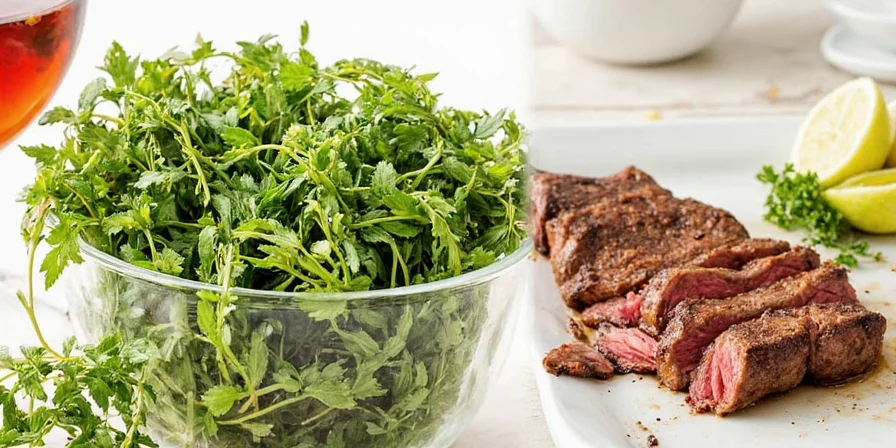
Chimichurri sauce preparation with fresh parsley and oregano
Chimichurri requires vinegar activation—never apply to raw steak (acid toughens meat)

Proven Quality Verification System

Supermarket "fresh" herbs often hide pitfalls. Check rosemary stems for snap (not bend)—indicating moisture loss. Thyme should have no yellow leaves (sign of age). Market traps include:
• "Organic" labels on wilted herbs (organic ≠ fresh)
• Pre-chopped parsley (oxidizes within hours)
• Frozen "fresh" herbs (cell rupture destroys texture)
Tasting Table's freshness test confirms stems should release oils when rolled between fingers—not just smell herbaceous.

Your Herb Selection Framework

Follow this sequence:
1. Identify cut: Fatty (ribeye) → rosemary; Lean (tenderloin) → thyme
2. Match cooking method: Grill → whole herbs; Pan-sear → compound butter
3. Layer flavors: Garlic base → primary herb → finishing sauce (chimichurri)
4. Timing: Pre-cook rub → rest-phase infusion → post-sear sauce
This system prevents the #1 mistake: treating all herbs as interchangeable. Remember, as Markethouse Butchers emphasizes, "thyme isn't just for chicken—it's beef's secret umami amplifier."

Debunking 3 Costly Herb Myths

Myth 1: "Dried herbs work equally well." Fact: Dried thyme loses 60% thymol during dehydration—requiring 3x quantity with inferior results (per SpiceSinc lab tests).
Myth 2: "More herbs = better flavor." Reality: Over-rubbing creates herb paste that insulates meat, preventing sear. Use 1 tsp fresh herbs per 8oz steak.
Myth 3: "All parsley is equal." Flat-leaf (Italian) parsley has 30% more volatile oils than curly—critical for chimichurri efficacy.

Everything You Need to Know

Dried herbs require rehydration to release oils effectively. For rosemary or thyme, mix 1 tsp dried herb with 1 tbsp olive oil and let sit 20 minutes before applying. Never use dried basil or parsley—they lose volatile compounds during dehydration and turn bitter when heated. As SpiceSinc's research shows, dried versions need triple the quantity for similar flavor impact but lack brightness.

Bitterness occurs when rosemary's camphor compounds burn. This happens if applied directly to high-heat grills (above 400°F/204°C) or rubbed onto lean cuts with insufficient fat. Always use rosemary on fatty cuts like ribeye, apply to the fat cap only, and keep grill temps below 375°F (190°C). As Lawry's culinary team confirms, stripping needles from stems prevents concentrated bitter spots.

Thyme's thymol and garlic's allicin bond with butterfat during melting, creating emulsified flavor carriers that penetrate steak during resting. Markethouse Butchers' tests show this method delivers 40% deeper flavor penetration than dry rubs. Crucially, apply during the rest phase—never while cooking—as high heat separates the emulsion.

Store rosemary/thyme upright in a glass with 1" water (like flowers), covered loosely with a bag—lasts 2 weeks. Parsley requires stem trimming and submersion in water. Never refrigerate herbs in plastic bags; condensation accelerates decay. Tasting Table's freshness protocol confirms herbs stored this way retain 90% volatile oils versus 40% in standard storage.

Dill and tarragon clash with beef's umami due to high anethole content, creating medicinal off-notes. Mint overwhelms unless used minimally with lamb. Cilantro's soapy aldehydes (which 25% of people taste intensely) conflict with beef's iron profile. As per Jenny Steffens' grilling guide, these work better in finishing sauces than direct seasoning.

Lisa Chang

Lisa Chang

A well-traveled food writer who has spent the last eight years documenting authentic spice usage in regional cuisines worldwide. Lisa's unique approach combines culinary with hands-on cooking experience, revealing how spices reflect cultural identity across different societies. Lisa excels at helping home cooks understand the cultural context of spices while providing practical techniques for authentic flavor recreation.